
For most of human history, people walked and ran with little or nothing on their feet. Cushioned, motion-controlling running shoes are only a few decades old. The minimalist running philosophy starts from that fact and asks a simple question: if our feet evolved to run, how much shoe do we actually need?
Less shoe, by design
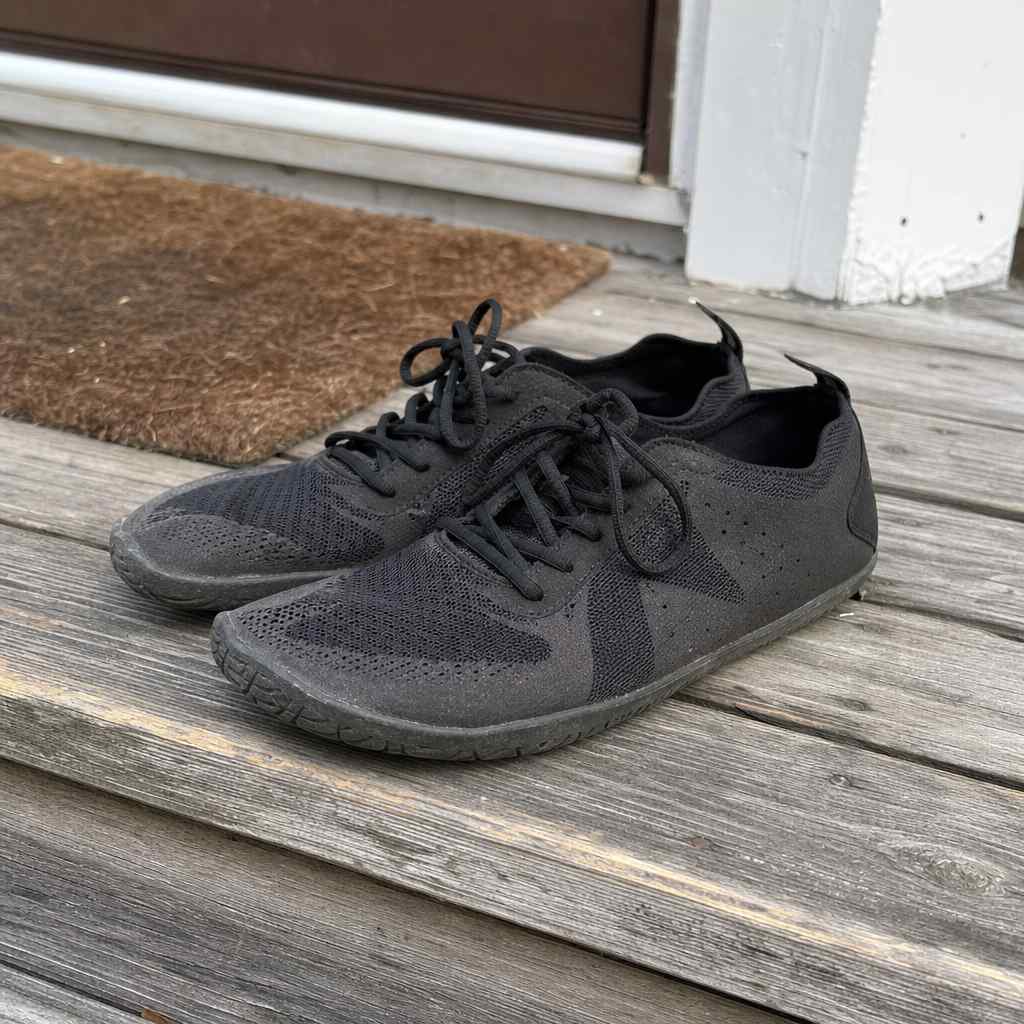
Minimalist running is the idea that less is more. Instead of a thick heel, stability posts and motion control, a minimalist shoe is thin, flat and flexible. Or there is no shoe at all.
The thinking has two parts:
- A built-up heel encourages you to land heel-first, ahead of your body, which sends impact up through the joints.
- Thick cushioning muffles the feedback your feet use to find a smooth, efficient stride.
Take the heel away and most people land closer to the midfoot, under their center of gravity. As far as form goes, the closer to barefoot, the more natural the landing tends to be. It is also why some runners are curious about the reasons people take up barefoot running in the first place.
It is a spectrum, not a switch
Fully barefoot and minimalist shoes are points on one path, not rival camps.
For many runners, a minimalist shoe is the sensible on-ramp. It keeps some protection from gravel and glass while still letting the foot move and feel the ground. If you run on rough paths or roads, going fully barefoot from day one is usually a poor idea.
The catch: your body has to adapt
Here is the part the enthusiasm skips. You have spent years, probably your whole adult life, in thick, supportive shoes. Your feet, calves and Achilles tendons are used to that support.
Switch to minimalist footwear and those tissues suddenly do more work. Do not expect to keep your old mileage. Runners who move to a minimalist approach almost always have to cut back at first and build up again.
Going minimalist is not about grabbing the thinnest shoe and running a dozen miles because it is “natural.” It is about giving your body time to earn the change.
Where to start
If the idea appeals, start slow and let your feet lead. Read barefoot running tips for beginners for the how, and is there one perfect way to run for the form details that matter once the cushioning is gone.
This is general information, not medical advice.