
Every running shoe has a drop number, and most runners have never checked theirs.
It’s a single measurement: the height difference between the heel and the forefoot.
A standard trainer might sit at 10mm. A zero-drop shoe sits at 0, heel and forefoot at the same height off the ground.
That one number changes more about how you run than most people expect. Here’s what drop actually measures, how zero-drop differs from “minimalist” and “barefoot,” and who should be cautious before switching.
What “drop” actually means
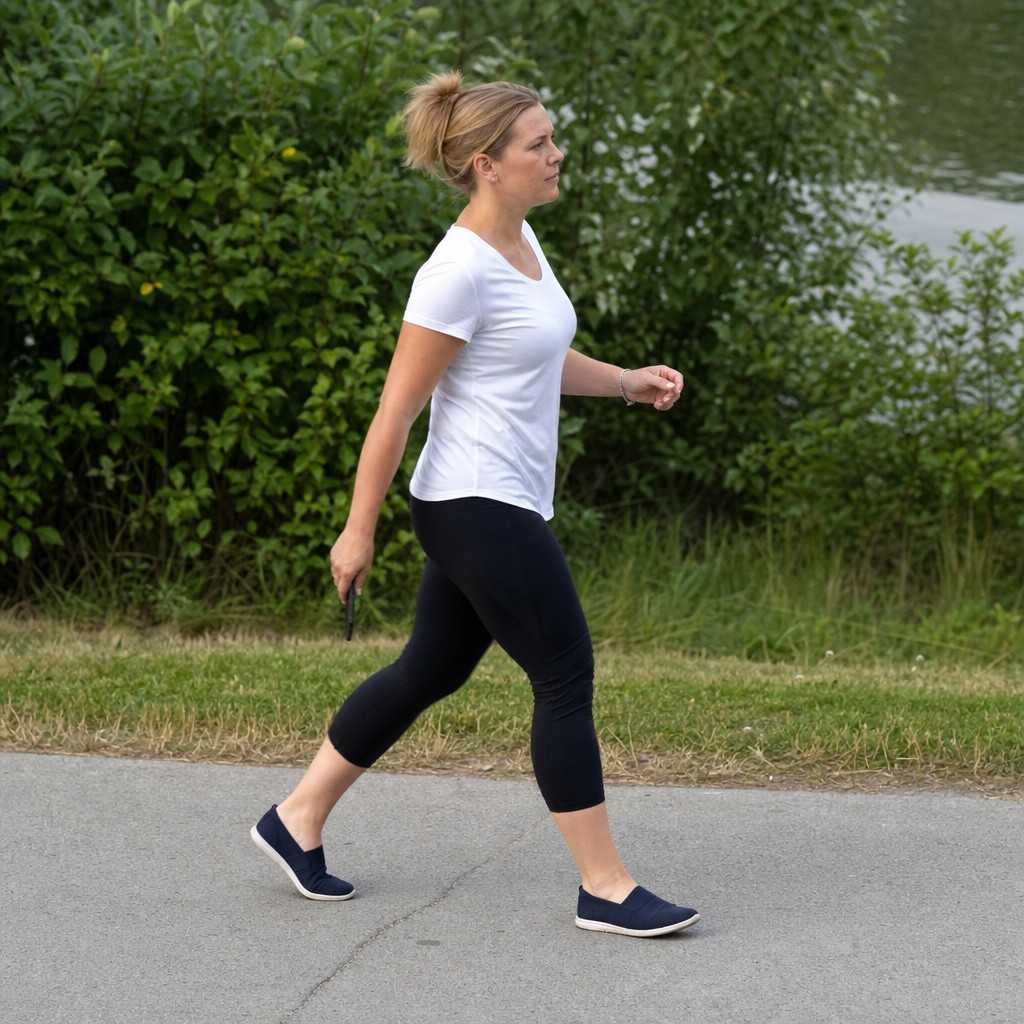
Heel-to-toe drop, or offset, is the difference in stack height between the back and front of a shoe’s sole.
A shoe with a 10mm drop raises your heel 10mm above your toes while standing still.
Conventional running shoes have used a raised heel since the 1970s running boom. That design choice largely aimed to reduce the workload on the calf and Achilles tendon during a heel strike.
A zero-drop shoe removes that ramp entirely, putting your foot in roughly the same position it would be in if you were standing barefoot.
Drop is separate from cushioning. A shoe can be zero-drop and still have a thick, well-cushioned sole.
It can also have plenty of drop and almost no cushioning. They’re two different specs that get bundled together in casual conversation.
Zero-drop isn’t minimalist, and it isn’t barefoot
This is where a lot of shoe marketing gets sloppy.
“Zero-drop” describes one measurement. “Minimalist” describes a whole design philosophy, and drop is just one part of it.
A true minimalist shoe usually combines a low or zero drop with a thin, flexible sole, a wide toe box, and minimal structure.
A shoe can be zero-drop and still be heavily cushioned, with a thick stack of foam under a flat platform. That shoe won’t feel or behave like a minimalist shoe, even though the drop number matches.
If you’re trying to sort out what actually counts as minimalist, how to choose minimalist running shoes breaks down the features that matter beyond drop alone.
Barefoot running is a different thing again: no shoe at all.
Minimalist shoes and fully barefoot are points on one path, not rival camps. Zero-drop shoes sit somewhere on that same path, closer to barefoot in geometry, but often further away in cushioning and protection.
- Zero-drop: heel and forefoot at equal height. Says nothing about cushioning or flexibility.
- Minimalist: low or zero drop plus a thin, flexible, low-structure build.
- Barefoot: no shoe. The reference point the other two are measured against.
If you’re weighing barefoot against a shoe at all, the barefoot versus minimalist comparison covers that decision directly.
What the claimed benefits are, and what actually holds up
The pitch for zero-drop shoes usually includes better posture, a more natural forefoot or midfoot landing, and stronger feet over time.
Some of that has real support. Some of it is thinner than the marketing suggests.
A controlled study of runners who wore zero-drop shoes for eight weeks found a genuine shift toward a forefoot landing. Strike index rose more than it did in a conventional-shoe group, according to research published in PMC.
That part is measurable and consistent with what the shoe design would predict.
The posture claim is softer. Standing flat rather than heel-elevated does change ankle position, and that can carry through to how you hold your gait.
But “better posture” as a broad health outcome hasn’t been established the way the strike-pattern shift has. Treat it as plausible, not proven.
The same study found something less flattering for the zero-drop pitch. Peak stress on the kneecap area dropped at first, then rose again after eight weeks of adaptation.
The tradeoffs move around as your body adjusts. They don’t just disappear in one direction.
The real risk of sudden calf and Achilles load
Here’s the part that gets skipped in most “try zero-drop” articles.
A raised heel does real mechanical work. It shortens the distance your calf and Achilles tendon have to work through on every stride. That’s part of why the raised-heel design became standard in the first place, according to Podiatry Today.
Take the ramp away, and that load has to go somewhere. It goes to the calf and Achilles.
The same research on long-term zero-drop use found that ankle joint work increased after weeks of adaptation. That’s a sign the ankle and calf were doing measurably more.
That’s not a reason to avoid zero-drop shoes. It’s a reason to respect the transition.
The transition is where injuries happen, not barefoot running itself. The same logic applies here almost word for word. A calf and Achilles tendon built around years of a raised heel don’t adjust to a flat platform in a week or two.
Warning signs worth knowing:
- Ordinary muscle soreness in the calf after a shorter-than-usual run is common early on.
- Sharp pain, or pain that feels deep in the Achilles tendon itself, is not.
- Swelling or stiffness that doesn’t ease with light movement is a reason to stop.
- So is pain that gets worse instead of better across a week. See a physical therapist or podiatrist rather than push on.
This is general information, not medical advice. Achilles tendon problems in particular are slow to heal and easy to make worse by running through them.
Who zero-drop shoes suit, and who should be cautious
Zero-drop tends to suit runners with decent ankle flexibility, healthy calves, and patience for a slow changeover. If you already land closer to your midfoot or forefoot, or you’ve spent time in minimalist shoes before, the jump is smaller.
People with a history of Achilles tendinopathy, chronic tight calves, or limited ankle dorsiflexion are the group most likely to run into trouble.
So are runners who try to keep their usual mileage the week they switch shoes.
Let your feet set the pace of the change, not your enthusiasm. In practice that means:
- Start with short, easy runs in the new shoes and keep your regular shoes in rotation.
- Add distance gradually over weeks, not days.
- Expect calf soreness for a while. Expect it to fade as the tendon adapts.
If you want to browse the category, you can see what a zero-drop build actually looks like on the shelf. You can compare zero-drop running shoes on Amazon.
For the mechanics of the philosophy zero-drop sits inside, the minimalist running philosophy is a useful next read. A slower, staged changeover is laid out in the transition guide.
Zero-drop isn’t a shortcut to better running. It’s a different set of demands on your feet and lower legs.
Whether that suits you depends on what your calves and Achilles can already handle. It also depends on how much time you’re willing to give them to catch up.